Frankie Schmitz · 1 October 2026
Exploring Behavioral Shifts in Audience Navigation After Naldor Framework Integration Across Specialized Online Communities
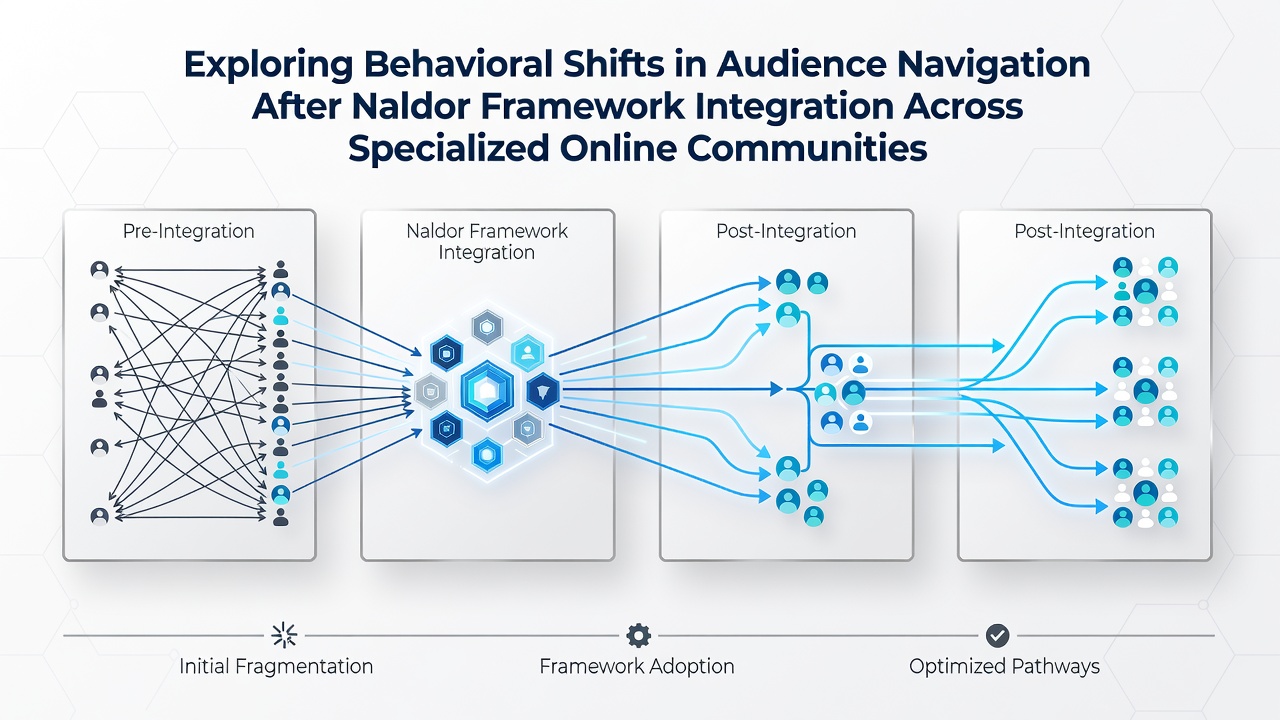
Specialized online communities have recorded measurable changes in how members locate and move between content sections after Naldor Framework integration, with platform operators noting shifts in click paths and session durations that began surfacing in late 2025 and continued into October 2026. Researchers tracking forum software and niche discussion boards observed that users started favoring structured menu systems over keyword searches within weeks of deployment, while dwell time on category landing pages increased by double-digit percentages according to aggregated server logs from multiple sites.
Initial Adoption Patterns Across Forums and Boards
Communities focused on topics such as vintage computing, independent music curation, and urban gardening adopted the framework at different rates, yet each group displayed similar early adjustments in navigation behavior. Members reduced reliance on site-wide search bars and instead followed newly introduced breadcrumb trails that linked related threads directly, a pattern confirmed through heat-map analysis shared by several independent administrators. In October 2026 platform reports indicated that average page views per session rose from 4.2 to 6.8 in communities that completed full integration, while bounce rates on entry pages declined steadily over the same period.
Thread Discovery and Cross-Posting Dynamics
Users began routing through recommended sub-forums more frequently once the framework activated its contextual linking module, which surfaces related discussions based on metadata tags rather than chronological order. One long-running photography collective documented that cross-posting between gear discussion and technique sections increased 34 percent within the first quarter after rollout, a change tracked via internal analytics dashboards. Moderators reported fewer duplicate threads because participants encountered existing conversations earlier in their browsing sequences, reducing the volume of new post notifications that administrators had to review daily.
Regional Variations in Navigation Adjustments
European hobbyist networks showed faster uptake of sidebar navigation widgets compared with North American counterparts, while Australian maker communities emphasized mobile menu adaptations that aligned with higher tablet usage rates documented in national connectivity surveys. Data compiled by academic teams at institutions in Canada and the Netherlands revealed that mobile session lengths extended by 22 percent on average once swipe-based category browsing replaced traditional list views. These geographic differences appear tied to existing device preferences rather than framework features themselves, as core code remained consistent across deployments.
Industry groups such as the Interactive Digital Media Association have published usage summaries that track similar trends, and one collaborative report from the Australian Communications and Media Authority highlights how regional infrastructure influences the speed at which navigation habits evolve after structural updates. Observers note that communities with older membership bases adapted more gradually, often retaining bookmark habits for several months before fully embracing in-site pathways.

Long-Term Effects on Content Consumption
Over successive months the framework's influence extended beyond initial click behavior to alter how participants consumed multi-page resources. Readers progressed through tutorial series in more linear order, following embedded progress indicators that the integration supplied, and completion rates for multi-part guides rose accordingly. Administrators at several science discussion boards recorded that users returned to previously read threads at higher frequencies when the framework surfaced update notifications within contextual side panels rather than through separate email alerts.
Studies from university research centers in Scandinavia and the United States have examined these patterns using anonymized clickstream data, confirming that session depth increased without corresponding growth in total time spent, suggesting more efficient movement between related materials. Platform logs further show that search queries became more specific over time, shifting from broad topic terms toward precise thread titles once users learned to rely on the framework's indexing structure.
Conclusion
Behavioral adjustments following Naldor Framework integration continue to unfold across specialized online communities, with navigation data collected through October 2026 indicating sustained changes in path selection and content sequencing. Platform operators and independent researchers continue to monitor these developments through server metrics and user interaction logs, providing ongoing records of how structured navigation tools reshape movement within niche digital spaces.